

Article: Green Emerald Buying Guide: Certification, Oiling Grades, and Colombian Muzo Quality
Green Emerald Buying Guide: Certification, Oiling Grades, and Colombian Muzo Quality
Buying a high-end green emerald is one of the most exciting choices in fine jewelry, but it can also feel confusing if you do not know what to look for on paper. Emeralds are natural, rare gemstones born deep inside the earth. To make sure you choose a genuine, high-quality stone that holds its value, you need to understand lab reports, oiling levels, and stone care.
Before we get into these details, you should know who is speaking. I am Kamal Narola, founder of Jonga in Dubai. My family has worked in diamond and gemstone jewelry since 1989. We are the only diamond manufacturers in Dubai with complete in-house manufacturing from rough stone to finished diamond and gemstone jewelry. Over the years, I have personally designed and made more than +500 jewelry pieces and consulted hundreds of people from different countries and cultures. That is why this guide is built on real gemstone selection, real studio making, and real client experience
Quick Summary for Smart Buyers
-
Top Lab Certificate: Always insist on a GRS (GemResearch Swisslab) or GIA (Gemological Institute of America) report.
-
Check the Oiling Grade: Look at the bottom of the lab report for "Minor" or "Minor to Moderate" oiling.
-
Avoid Resin: Natural clear oiling is good and traditional, but chemical resin or plastic fillings destroy true value.
-
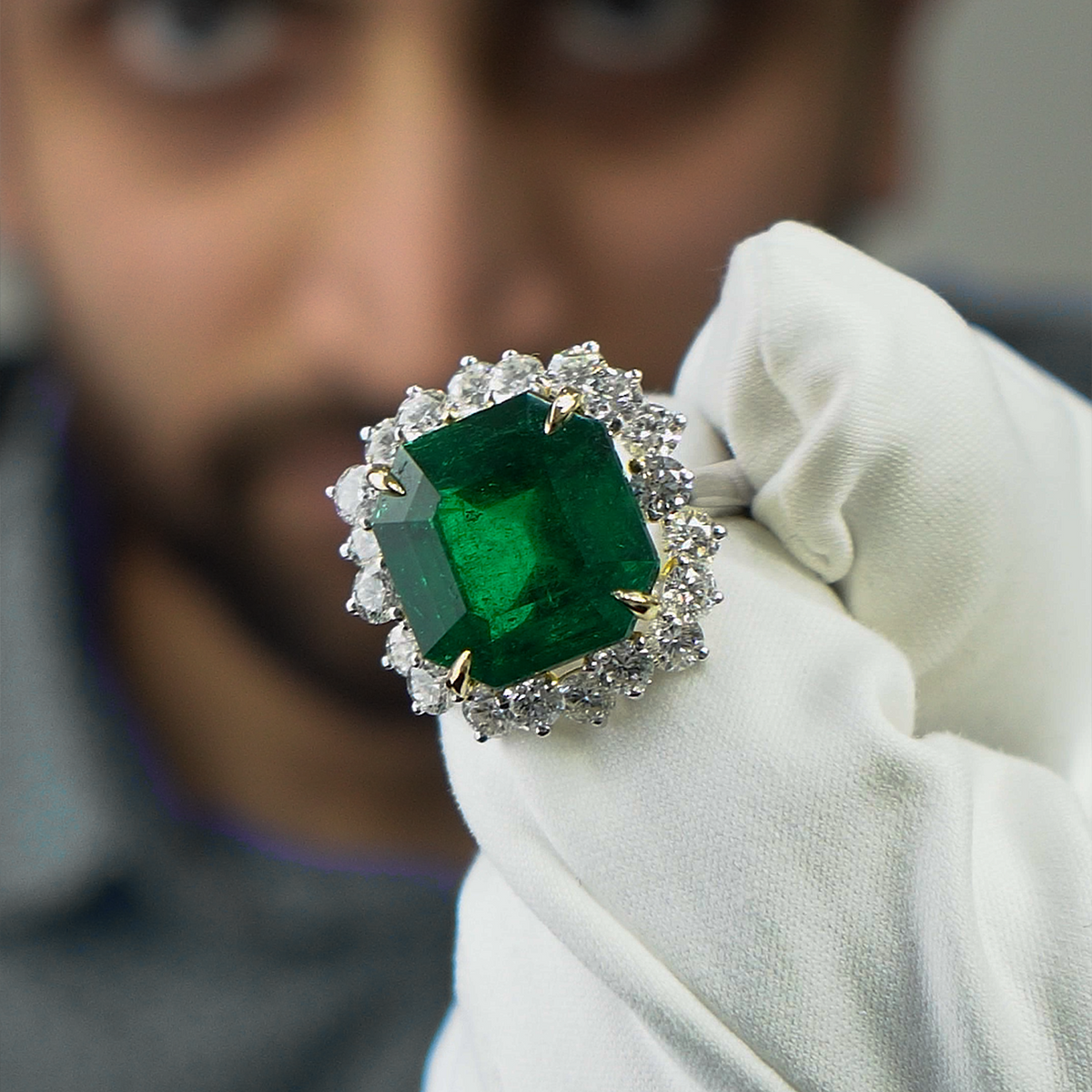
Origin Matters: Colombian emeralds from the famous Muzo mine are prized worldwide for their rich green color.
-
Setting Needs Care: Emeralds are more delicate than diamonds, so expert setting and fresh metal structures are non-negotiable.
1. What is the "Jardin"? Understanding Natural Emerald Birthmarks
Unlike diamonds, which are judged heavily on absolute eye-clean clarity, natural emeralds almost always have natural marks inside them. In the gem world, these internal lines, feathers, and tiny crystal growth marks are called the "Jardin" (the French word for garden).
Simple Rule: Do not fear a natural garden inside your emerald! These internal birthmarks prove that your stone was created naturally by mother nature over millions of years, rather than made in a factory.
However, when these tiny natural lines reach the outer surface of the stone, they create microscopic fractures (tiny surface cracks). How a jeweler handles these surface cracks determines the stone’s ultimate beauty and long-term quality.

2. Always Insist on World-Renowned Lab Certification (GRS or GIA)
When investing in a fine gemstone, never rely on store promises or unverified paperwork. High-grade natural emeralds must come with an independent report from a globally respected gemological laboratory.
The two gold-standard laboratories for high-grade precious gemstones are:
-
GRS (GemResearch Swisslab): Widely considered the leading global authority specifically for colored gemstones like emeralds, rubies, and sapphires.
-
GIA (Gemological Institute of America): The world's most recognized institute for diamonds and natural gems.
A legitimate GRS or GIA report will clearly confirm:
-
Whether the stone is Natural Emerald.
-
The exact carat weight, dimensions, and color saturation.
-
The country of origin (e.g., Colombia, Zambia, or Afghanistan).
-
The exact degree of clarity enhancement (oiling level).

3. Understanding Emerald Oiling Grades: No Oil vs. Minor Oil
Oiling is a standard, centuries-old practice in colored gemstones. Because emeralds naturally have microscopic surface cracks, clear natural cedarwood oil is gently applied to the stone. The oil seeps into these tiny surface lines, making them far less visible and allowing light to pass through smoothly to enhance natural green brilliance.
However, the amount of oil an emerald absorbs tells you how clean the stone was in its natural state before oiling.
The Oiling Scale Explained Simply:
| Oiling Grade on Certificate | What It Means | Rarity & Value Level |
| None / Insignificant | The stone has virtually no surface-reaching cracks. Zero or trace oil present. | Extremely rare museum or auction-grade stone. Highest collector value. |
| Minor | The stone has very few microscopic surface cracks. Absorbed minimal oil. | High-end luxury grade. Exceptional clarity, durability, and high value. |
| Minor to Moderate | Standard high-grade emerald with light natural oiling. | Excellent balance of natural beauty and real-world luxury value. |
| Significant / Heavy | The stone has many deep surface fractures filled with heavy oil. | Commercial retail grade. Lower value and higher risk of dullness over time. |
Key takeaway: A GRS-certified emerald marked with "Minor to Moderate" oiling has very few microscopic surface cracks to begin with. That natural purity is why low-oiled emeralds command far higher value than standard stones, even when comparing identical green shades.

4. What Goes Wrong in the Market: Resin and Chemical Polymers
Not all gemstone treatments are equal. While natural clear oiling is reversible and preserves the stone naturally, many commercial mass-market suppliers use artificial fillers.
What to avoid at all costs:
-
Resin Fillers (Opticon / Epoxy): Liquid plastic or liquid glass pushed into cracks under heat. Over time, resin turns yellow, clouding the green color permanently.
-
Dyes and Color Coatings: Artificial green chemicals added to make pale stones look darker.
|

5. Colombian Muzo Emeralds: Why Origin Matters
While emeralds are mined in several countries including Zambia, Brazil, and Afghanistan Colombian emeralds remain the most coveted by collectors.
Inside Colombia, the legendary Muzo Mine is world-famous. Muzo emeralds display a unique, pure green color tone with warm yellow-green undertones that do not turn dark under evening indoor light.
Whether you are looking for an everyday natural ring or an auction-grade Muzo emerald centerpiece, sourcing through a trusted jeweler who understands stone selection guarantees you get true origin and clean certificates.

6. How to Care for & Set a Delicate Emerald Ring Safely
Emeralds measure 7.5 to 8 on the Mohs hardness scale. While they are hard enough for daily wear, they are more delicate than diamonds (which score 10). Setting a softer or heavily included gemstone requires extreme care, patience, and expert technique.
Here is how Jonga ensures your custom emerald piece is built to last for generations:
1. 3D Scanning Before CAD Modeling
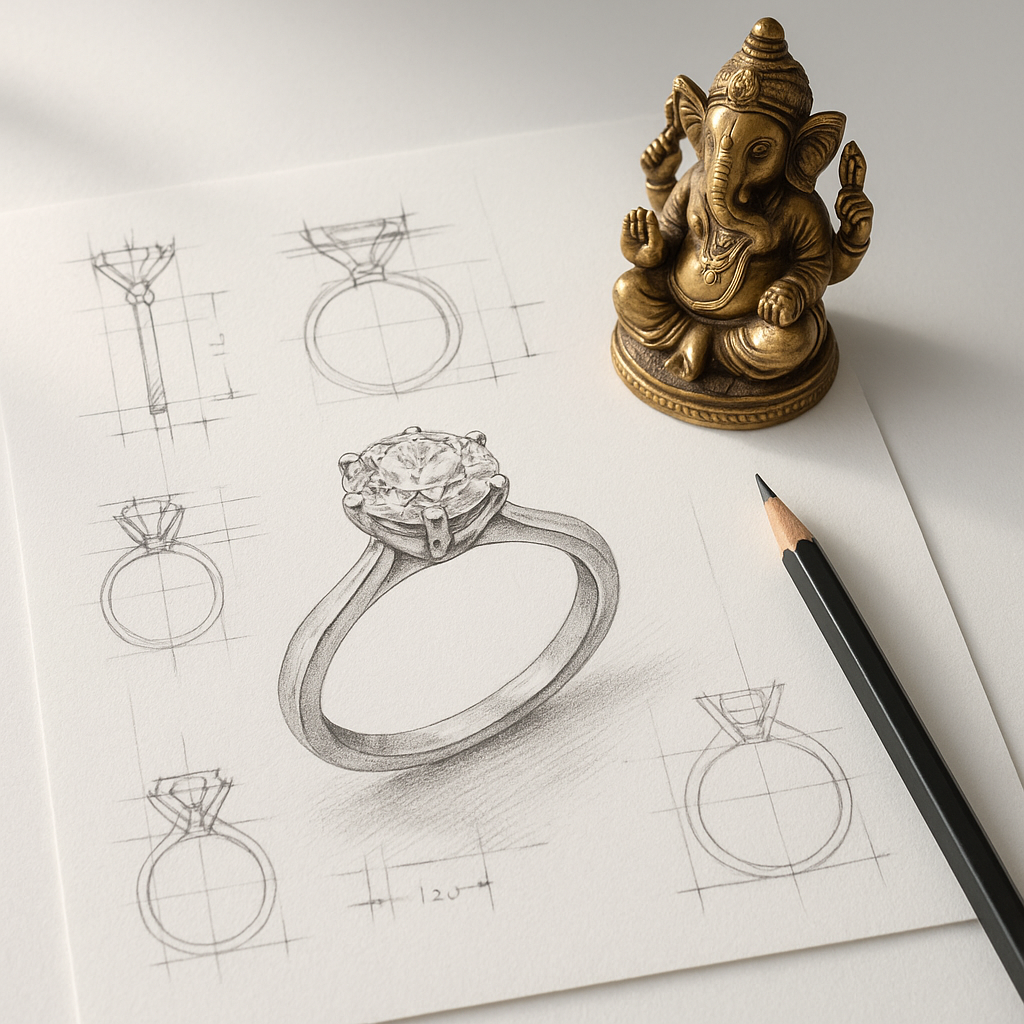
We scan or measure each individual gemstone before finishing the 3D model. This ensures the metal frame holds the exact dimensions of the stone without putting unnatural pressure on delicate corners.
2. 100% Fresh Gold Structures
We craft every ring, pendant, and pair of earrings using fresh gold rather than re-melted scrap metal. Fresh gold prevents porosity which means tiny holes or micro-cracks inside the metal ensuring strong prongs that keep your stone safe.
3. Pre-Polishing Hidden Gold
Before your emerald is set, we pre-polish the hidden gold seat underneath the stone. When light enters your green emerald, it bounces off the polished gold beneath it, throwing richer color and extra sparkle back up to your eye.
4. Microscope QC & Hand-Smoothed Prongs
Founder Kamal Narola personally inspects every finished piece under a microscope. Prongs are hand-rounded and smoothed so they hold the stone securely without scratching skin or catching on clothes.
How to Care for Your Emerald Jewelry at Home
To keep your natural emerald looking vivid and brilliant over time:
-
Never use ultrasonic cleaners: High-frequency ultrasonic soundwaves can vibrate the natural clear oil out of the stone's microscopic surface lines.
-
Avoid steam cleaning and harsh chemicals: Keep your emerald ring away from dish soap, hand sanitizers, chlorine pools, and perfume.
-
Clean gently with lukewarm water: Use mild soap, warm water, and a very soft microfiber cloth or soft toothbrush to clean underneath the stone.
Frequently Asked Questions (FAQs)
Q1: Is a Zambian emerald better than a Colombian emerald?
Answer: Both produce incredible gems! Colombian emeralds (especially from Muzo) are famous for their vivid, warm green color. Zambian emeralds often have a cooler, bluish-green hue and slightly higher eye-clarity. Choice comes down to personal taste, but Colombian origin carries high historic prestige.
Q2: Is natural oiling permanent?
Answer: Natural clear cedarwood oil is stable, but over the months it can slowly make crakes more visible. A trusted jeweler can easily re-oil a natural emerald to restore its deep lustre without damaging the gem.
Q3: Can I wear an emerald engagement ring every day?
Answer: Yes, as long as the design protects the stone! Choosing a protective bezel setting or a balanced prong setting crafted with fresh gold ensures your emerald stays safe during everyday wear. if the emerald touches your skin it will naturally oiled by your skin body oil.
Q4: Why are green emeralds oiled, and does oiling lower their value?
Answer: Oiling is a traditional, centuries-old natural process accepted worldwide in fine jewelry. Because almost all natural green emeralds have microscopic surface-reaching fractures (jardin), clear natural cedarwood oil is gently introduced to make these tiny lines less visible and improve light transmission. Natural cedarwood oiling does not reduce a gemstone's value; in fact, a stone with "Insignificant or Minor" on a GRS or GIA certificate holds exceptional rarity, purity, and high market value.
Q5: What is the main difference between Colombian and Zambian emeralds?
Answer: The primary difference lies in color tone and trace element composition:
-
Colombian Emeralds (e.g., Muzo Mine): World-renowned for their pure, vivid green hue with warm undertones that glow brightly even under artificial evening light. They are the most historically prized by gemstone collectors.
-
Zambian Emeralds: Typically exhibit a deeper, cooler green color with subtle bluish undertones and generally feature higher eye-clean clarity. Both are valuable, but top-tier Colombian Muzo emeralds command the highest prestige at global auctions.
Q6: What does "Minor Oiling" or "Minor Clarity Enhancement" mean on a certificate?
Answer: When a GRS or GIA report lists "Minor," it means the emerald naturally possessed very few microscopic surface cracks prior to oiling. The stone absorbed only a tiny amount of natural clear oil. Because stones born with such high natural clarity are extremely rare, "Insignificant or Minor" emeralds command significantly higher price-per-carat rates than stones with "Moderate" or "Significant" oiling.
Q7: Are high-quality natural green emeralds more expensive than diamonds?
Answer: Yes, per carat, top-grade natural emeralds with vivid color saturation and minimal oiling can be significantly more expensive than standard white diamonds. Because fine natural emeralds are exponentially rarer in nature than diamonds, high-end emeralds especially untreated or minor-oiled auction-grade stones command premium investment values.
Q8: How can I tell if an emerald is natural, synthetic, or lab-grown?
Answer: Natural emeralds almost always contain internal birthmarks called the Jardin (natural inclusions, liquid feathers, and microscopic growth lines). Lab-grown or synthetic emeralds often look unnaturally flawless, exhibit chevron growth lines, or display glass-like bubbles under magnification. To protect your investment, always insist on an independent laboratory report from GRS (GemResearch Swisslab) or GIA (Gemological Institute of America). and also bu from trusted jewelers like JONGA JEWELS.
Q9: Why should I strictly avoid resin-filled or polymer-treates emeralds?
Answer: Commercial mass-market dealers often use liquid plastic resins (like Opticon or epoxy) to artificially seal severe surface cracks. Unlike natural cedarwood oil, artificial resins degrade, turn yellow, and cloud the gemstone over time. Resin treated stones lose their resale value and are not considered genuine heirloom luxury gems.
Q10: Can I wear a green emerald engagement ring every day?
Answer: Yes, provided the ring is engineered correctly! Emeralds rate 7.5 to 8 on the Mohs hardness scale, making them durable enough for regular wear. However, because they are more brittle than diamonds, your ring should feature protective prongs, a bezel frame, or a balanced setting crafted in 100% fresh gold to absorb daily impact without putting pressure on the stone.
Q11: How should I clean and care for my green emerald jewelry at home?
Answer:
-
Do: Clean gently using lukewarm water, wear daily so emerald can naturally oiled from your body oil, you can clean from jeweler like jonga jewels.
-
Do NOT: Never use ultrasonic jewelry cleaners or steam cleaners. The high-frequency vibrations and intense heat can strip natural clear oil out of the stone's microscopic surface lines. Keep emeralds away from harsh chemicals, hand sanitizers, chlorine, and perfumes.
Q12: Which emerald cut is the most valuable and ideal for rings or pendants?
Answer: The classic Emerald Cut (octagonal step-cut) is the most iconic and valuable shape. It was specifically created to highlight deep green color saturation while protecting the gem's corners from chipping. Oval, cushion, and pear cuts are also highly popular for custom rings and bespoke pendants when precision-cut to maximize brilliance.
Q13: How much does a high-grade 1-carat to 3-carat natural emerald cost?
Answer: Pricing varies based on color intensity, origin, clarity, and oiling grade:
-
Commercial Grade: $500 – $1,500 per carat (Moderate to heavy oiling/inclusions).
-
Fine Grade: $2,000 – $6,000 per carat (Vivid green, minor to moderate oiling).
-
Top-Tier / Auction Grade (Colombian Muzo): $8,000 to over $20,000+ per carat (Vivid green, minor or no oiling, certified GRS/GIA).
Q14: How can international tourists buy custom emerald jewelry in Dubai?
Answer: At Jonga Jewels, international travelers can schedule a direct consultation with founder Kamal Narola upon arriving in Dubai. Once you select your GRS-certified natural emerald and approve a 3D CAD design, your custom ring or pendant is crafted in-house in 3 to 5 working days. Furthermore, tourists purchasing fine jewelry in Dubai qualify for seamless VAT refunds processed at the airport upon departure.
Ready to Find or Craft Your Natural Emerald Piece?
Choosing a high-end natural green emerald comes down to knowledge, clear certification, and jeweler trust. When you build a piece with purpose, it becomes more than decorative jewelry it becomes a family heirloom passed down through generations.
If you want Kamal Narola and Jonga to help you select a natural emerald or design a custom piece in Dubai, you can start your consultation here: https://jonga.one/pages/new-bespoke. Every piece is crafted in-house with founder guidance, fresh gold structures, and a commitment to long-term quality and meaning.