
The White Gold Mystery: Why Mass-Market Engagement Rings Turn Yellow (And How Jonga Engineering Beats the Industry)
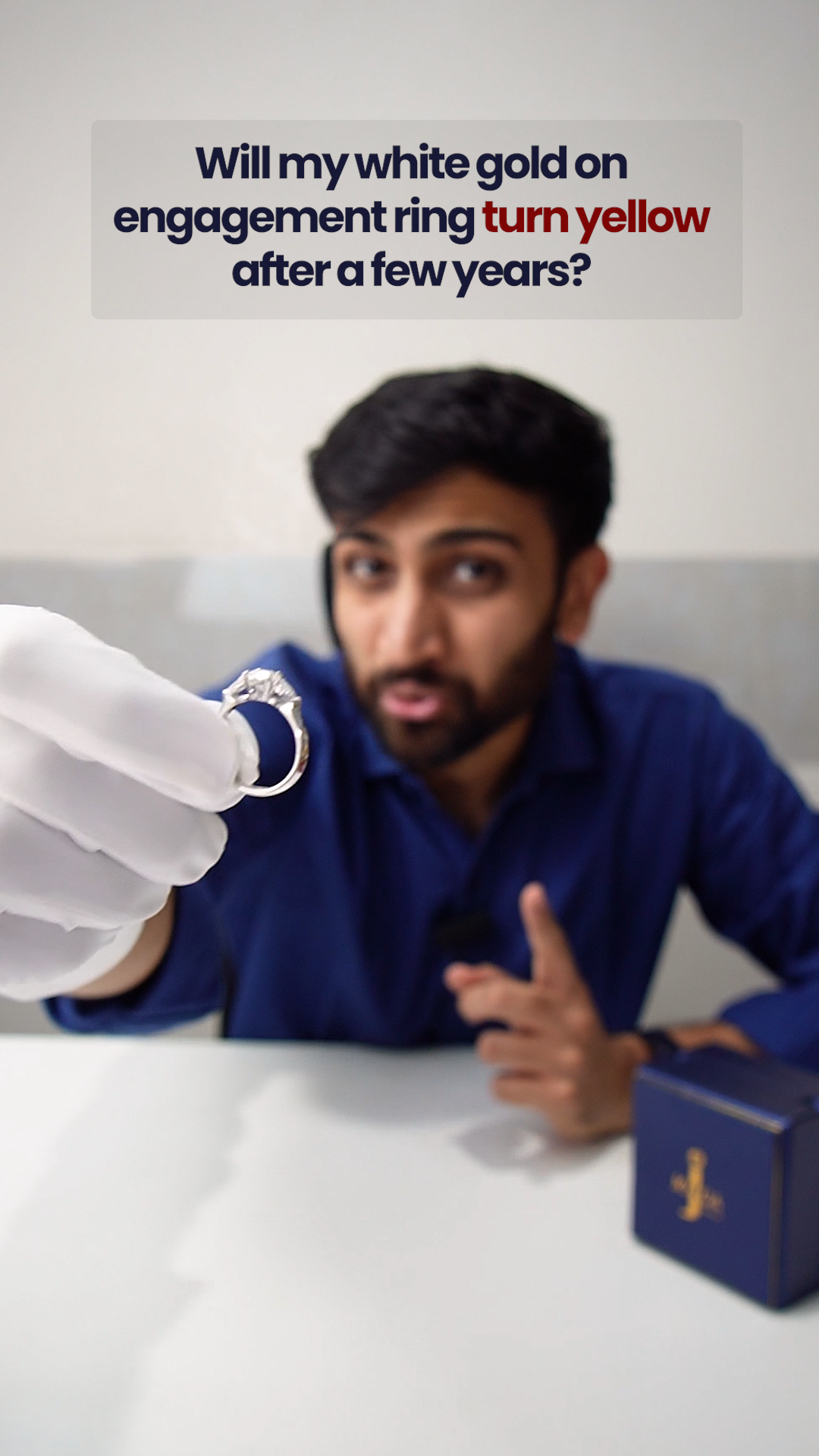
When investing in an 18k white gold engagement ring, one critical question crosses every buyer's mind: Will this brilliant white finish fade, look dull, or turn yellow after a few years?
According to Kamal Narola, founder of Jonga in Dubai, the honest truth is a sharp reality check: if your ring was purchased from a standard mass-market retail store, most probably, yes.
To understand why ordinary white gold loses its pristine luster and how true master craftsmanship prevents it we have to look at the exact metallurgy and manufacturing standards behind the ring.
1. The Metallurgy Breakdown: What is 18K White Gold?
Pure gold in its natural state is bright yellow and far too soft for daily engagement ring wear. To make it durable enough for everyday life, jewelers alloy pure gold with other white metals.
An 18k white gold piece is precisely proportioned:
| Component | Percentage | Purpose in Fine Jewelry |
| Pure Gold | 75.0% |
The precious core, indicated by the official "750" hallmark.
|
| Alloy Metals | 25.0% | White metals (like palladium or silver) added to bleach the yellow tone and add hardness. |
However, the lifespan of your ring depends entirely on which alloy metals are chosen and how cleanly the metal is cast.

2. Mass-Market Retail vs. Jonga In-House Craftsmanship
Why do commercial rings degrade, yellow prematurely, or even develop structural stress cracks? The table below highlights the fundamental differences between mass-market shortcuts and Jonga's uncompromising studio standards:
| Production Stage | Mass-Market Retailers | The Jonga Standard (Dubai) |
| Gold Sourcing |
Uses cheap, re-melted recycled scrap metal, introducing hidden impurities.
|
100% Fresh Gold Only: Freshly alloyed 18k gold for maximum structural integrity and purity.
|
| Alloy Quality |
Low-grade alloy mixes that accelerate color breakdown and yellowing.
|
Premium white alloy blends engineered to retain color stability and structural strength. |
| Casting & Porosity |
Rushed manufacturing creates microscopic air bubbles and weak spots inside the band.
|
Precision 3D CAD modeling and meticulous casting eliminate micro-porosity entirely. |
| Durability Risk |
High risk of structural weakening, prong distortion, or gold cracking over time.
|
Exceptional tensile strength and secure prong settings built for a lifetime of daily wear.
|
| Quality Control | Automated factory batch checks that miss micro-flaws. |
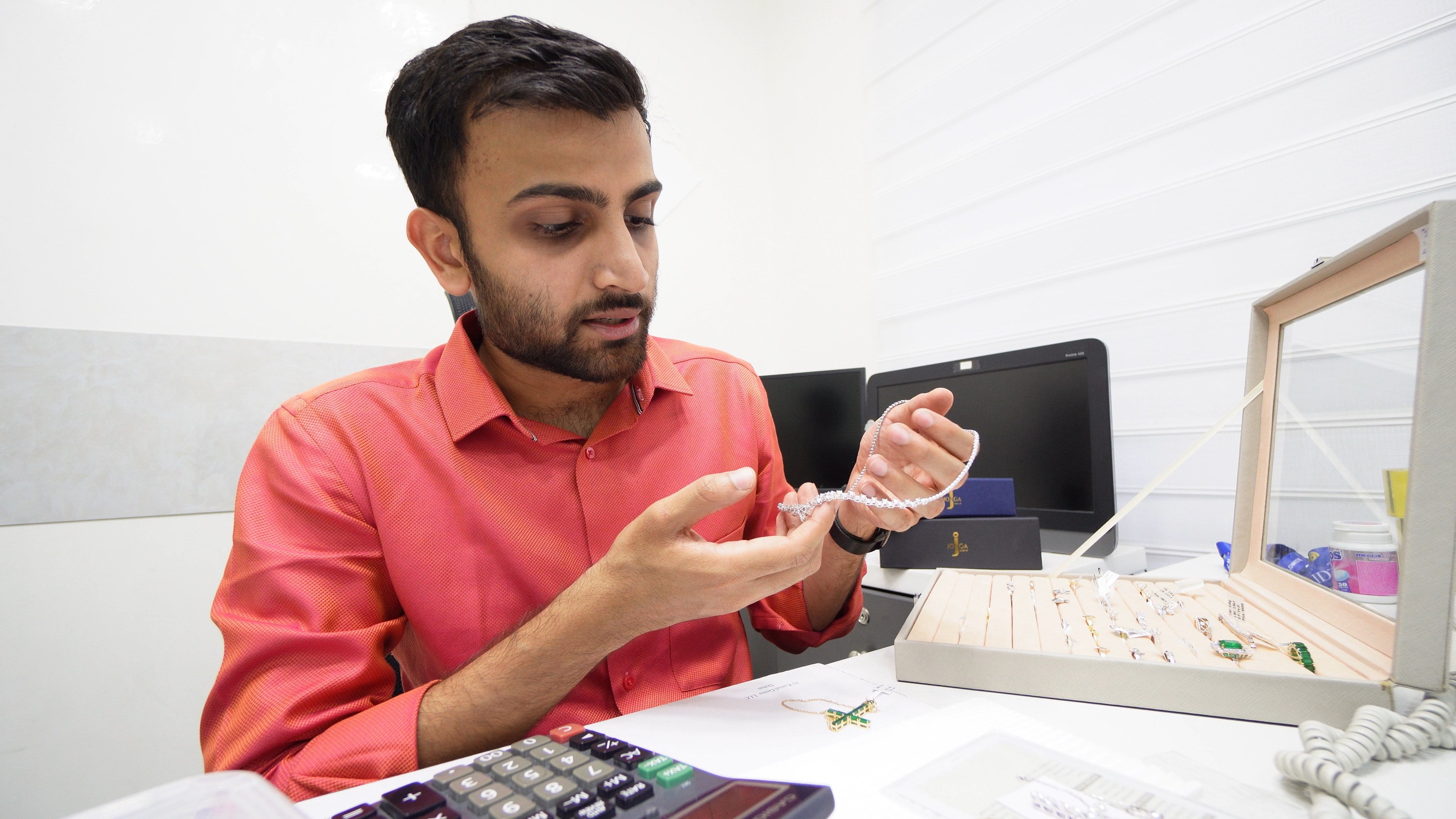
Microscope QC: Founder Kamal Narola personally inspects every piece under high magnification.
|
This is what happens when you buy from untrusted jewelers or retailers!

3. Why Jonga Builds Everything In-House
When you outsource jewelry production to overseas factories, quality control is lost. That is why Jonga operates with 100% complete in-house manufacturing in Dubai.
By handling every single step from raw gold alloy preparation and 3D modeling to expert stone setting and final hand-polishing under one roof, we make sure your white gold engagement ring is crafted to look as brilliant and durable as the diamond it holds.
Frequently Asked Questions (FAQs)
Q1: Does white gold exist naturally in the earth?
Answer: No. White gold is an alloy created by combining pure yellow gold with white metals like palladium or silver, finished with rhodium plating for a mirror-like shine.
Q2: Why do some white gold rings turn yellow faster than others?
Answer: Rings made with inferior alloy mixes, poor casting techniques, or thin rhodium plating lose their protective finish quickly, allowing the yellowish base gold to show through.
Q3: Can a poorly made white gold ring actually crack?
Answer: Yes. If a ring is manufactured with hidden internal porosity or improper metal mixing, structural stress can cause the gold to crack over time.
Q4: How does Jonga prevent white gold from degrading?
Answer: By maintaining 100% in-house manufacturing, using strictly fresh 18k gold alloys, and executing rigorous microscopic quality control.
Q5: Can international tourists order custom white gold rings in Dubai?
Answer: Yes! International visitors can schedule a direct consultation with founder Kamal Narola upon arriving in Dubai. Custom rings are crafted in-house in 3 to 5 working days, complete with tourist VAT refund eligibility for airport departure.